
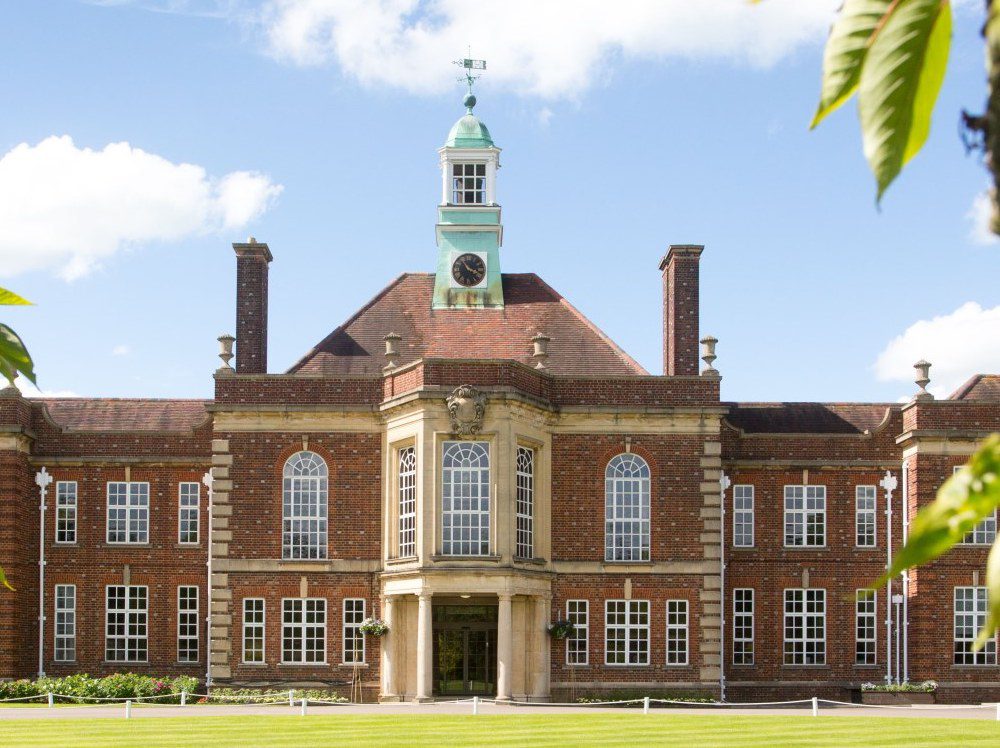
The National Mathematics and Physics SCITT (NMAP SCITT) provides specialist training for mathematics, physics, and engineering graduates pursuing a career in physics teaching.
Are you interested in being a placement school for an NMAP SCITT trainee?
- Would a specialist trainee with the skills and capacity over time, to observe and support, team teach, work with individuals and groups of students, and plan and deliver whole class teaching, be a welcome asset to your school?
- Are you looking for professional development opportunities for current or future members of staff in these departments?
- Does the idea of ‘growing your own’ future members of staff appeal to you?
- Do you want to play your part in supporting the future-proofing of the teaching profession?
The benefits of hosting an NMAP SCITT trainee
- The NMAP SCITT attracts high-quality candidates with an excellent level of subject knowledge and trains them to become specialist teachers of their subject.
- Our programme boasts excellent retention and employment rates, with many trainees securing ECT posts in their main placement schools.
- School placements play a vital role in initial teacher training and are essential for developing confident, capable ECTs.
- Hosting and mentoring a trainee offers significant benefits, including professional development for mentors, fresh energy and ideas, and the addition of a specialist resource to the department.
- The NMAP SCITT conducts a rigorous interview process and completes screening checks for all applicants including an enhanced DBS check prior to the start of their training year.
NMAP SCITT school placements
The NMAP SCITT operates via hub schools across England. Each hub school delivers training for trainees and trains and supports the placement school mentors in their area. The NMAP SCITT hubs are based in:
Trainees will spend most of their time in two contrasting placements: Placement A from September to December and Placement B from January to June, completing their training in June.
Each week, they will attend their hub school for professional studies training one day a week, while the remaining four days will be spent in school on placement. Additionally, they will participate in central training days, delivered both in person and online.
As supporting members of the school team, trainees work alongside class teachers, engaging in team teaching and supporting individuals and groups of students. This approach helps them build confidence and develop the skills needed to lead whole-class teaching. Trainees quickly become valued members of their departments and are eager to make a positive impact from the start.
Trainees’ progress is carefully monitored throughout the course. Our curriculum is designed around the Core Content Framework, and trainees, alongside their mentors, use an e-portfolio to track their development and provide evidence of meeting the Teachers’ Standards. By the end of the course, they are assessed for recommendation for Qualified Teacher Status.
The role of the placement school
The placement school will need to:
- Provide a suitably experienced, trained mentor to meet with the trainee for one and a half hours per week, carry out a formal lesson observation once a week, and meet with the hub school lead as required.
- Provide opportunities for the trainee to work in both KS3 and KS4 classes, with students of different abilities, across the 11 – 16 age range (where appropriate, trainees may also work in KS5).
- Enable trainees to have an appropriate role at Parents’ Evening, Open Days/Evenings and in extra-curricular activities.
- Release mentors to attend mentor training as part of the mentor’s continuing professional development.
- Support with recruitment into the profession by advertising their partnership with the NMAP SCITT on their website and displaying promotional materials in their school.
- Adhere to the content of the placement school agreement between the NMAP SCITT and the placement school.
The role of the mentor
- A comprehensive handbook is provided prior to the start of the new academic year which includes detailing the mentor’s role and responsibilities.
- Mentors will also develop a working relationship with their local hub school lead, who will conduct joint observations with them and is available to guide and support the mentor throughout the year.
- Paperwork has been streamlined and kept to a minimum. Mentors record lesson observations and weekly progress meetings straight into the trainee’s e-portfolio to keep paperwork to a minimum.
- The mentor is expected to complete NMAP SCITT mentor training. This training will explain the curriculum, how the programme works, and the role of the mentor in the training, as well as the support and development of the trainee.
- A bespoke comprehensive programme of mentor training will be offered.
- Mentors are expected to attend mentor meetings with the hub school lead throughout the academic year.
Registering as a placement school
To register as a placement school for one of our trainees, or if you would like more information, please contact us: enquiries@nmapscitt.org.uk